Research Guide · 6 min read · Updated 2026-08-01
GHK-Cu Research Guide: The Copper Peptide in Matrix Research
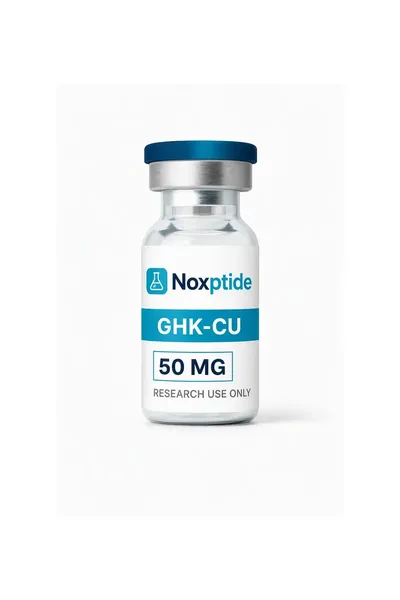
GHK-Cu — Copper Tripeptide-1 — is one of the oldest and best-documented research peptides in dermatological science. First isolated from human plasma, its literature spans collagen synthesis, extracellular matrix remodelling, antioxidant defence and wound repair. It also has a built-in quality signal most buyers never learn to read.
The Blue Colour Is a Quality Test
Properly chelated GHK-Cu is vivid blue — the colour of the copper complex itself. Pale, greyish or white material suggests incomplete chelation or degraded product. This makes GHK-Cu unusual: you can perform a first-pass quality check by eye before any instrument confirms it. Your COA should still show ≥99% HPLC purity and correct MS identity (403.9 g/mol).
What the Research Literature Covers
Four decades of published work examine GHK-Cu in collagen and glycosaminoglycan synthesis, dermal remodelling, wound healing, antioxidant pathways and hair-follicle biology. It is among the most-cited cosmetic-science peptides — though Noxptide supplies it strictly for in-vitro research, not formulation use.
Handling and Storage
Store lyophilised GHK-Cu at -20°C protected from light. Reconstitute with bacteriostatic water or the solvent specified for your assay, and refrigerate at 2–8°C after reconstitution. The blue colour should remain vivid in solution; fading suggests degradation.