Research Guide · 6 min read · Updated 2026-08-01
Semax Research Guide: The ACTH(4-10) Analogue in CNS Studies
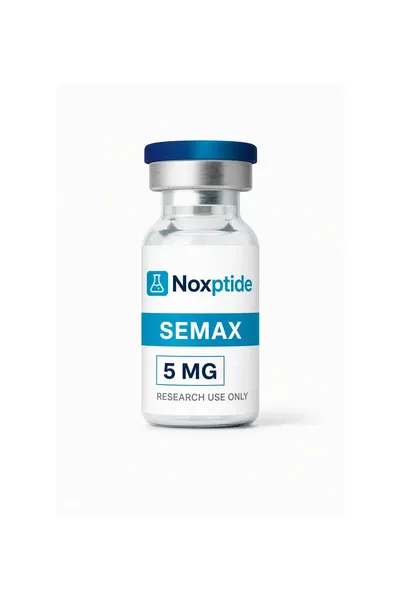
Semax is a synthetic heptapeptide built on the ACTH(4-10) fragment with a stabilising Pro-Gly-Pro tail. Developed through decades of neuroscience research, it is the benchmark nootropic-class peptide in CNS research. This guide covers the literature, its light-sensitive handling requirements, and analytical verification.
What the Research Literature Covers
The Semax literature concentrates on neuroprotection (including ischemia models), neurotrophin expression — particularly BDNF — and CNS melanocortin signalling. Its Russian research heritage means a large body of work sits outside mainstream Western databases, but PubMed indexes a substantial and growing set of studies.
Handling: Semax Is Light-Sensitive
Semax degrades faster under light exposure than most research peptides. Store the lyophilised powder at -20°C protected from light, minimise bench time in bright conditions, and refrigerate reconstituted solution at 2–8°C. Noxptide ships Semax in light-protective packaging for this reason.
Frequently Paired: Selank
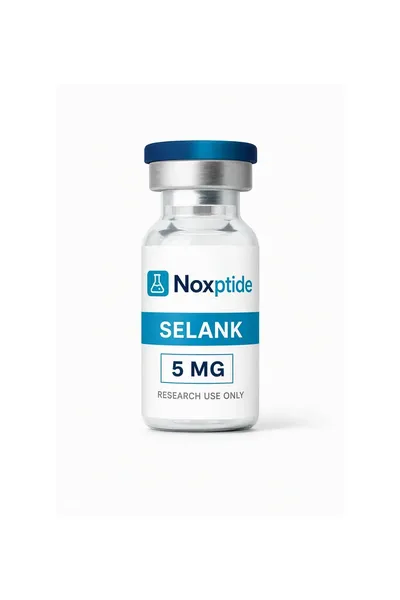
Semax is most often examined alongside Selank, the tuftsin-analogue heptapeptide, in parallel CNS research programmes. The two compounds share the Pro-Gly-Pro stability tail but have distinct origins and literature: ACTH fragment versus immunomodulatory tetrapeptide.